


- Home
- About True Blue Italy
- TOURS
- Rome
- Private tours
- Caravaggio Art Walking Tour
- Tesori Nascosti
- The Vatican City State
- The Crypts and Catacombs of Rome
- The Colosseum, Roman and Imperial Forums, Palatine Hill
- Group tours
- Rome in Flow: A Luxury Walking Tour of Fountains & Baroque Squares
- Colosseum Tour with Belvedere
- Rome's piazzas
- Civita di Bagnoregio & Bomarzo Monster Park
- Civita di Bagnoregio and Bomarzo Monster Park / Chauffeur Guided Tour
- Civita di Bagnoregio, Bomarzo Monster Park & Wine
- Borghese Gallery and the gardens
- Etruscan Wonders
- Etruscan Wonders / Chauffeur guided tour
- Caravaggio Art Walking Tour - the Other Michelangelo
- Hidden Treasures
- The Crypts and Catacombs of Rome
- The Crypts and Catacombs of Rome / Self-guided
- Vatican and Sistine Chapel Tour
- Multi-day tours
- Rome
- SCHOOLS & FACULTY
- Our services
- Italy travel blog
- Contact us




Rome in Flow: A Luxury Walking Tour of Fountains & Baroque Squares
Welcome to Rome! Explore the essentials of Rome's historic center through its monumental fountains!
Discover some of the secrets of the Eternal City in a small group with a local tour guide!
Want to discover the Eternal City? We accompany you along a privileged journey between art, history and absolute beauty
Rome’s extraordinary network of ancient aqueducts made water a symbol of life, power, and beauty. From the Renaissance to the Baroque age, master artists transformed fountains into theatrical masterpieces that still define the city’s identity today. Designed for discerning travelers, this small-group experience unfolds at a relaxed pace, allowing time to observe details, stories, and hidden connections often missed by the crowd. Walking is the most authentic way to experience Rome, and this itinerary follows one of the city’s most harmonious routes.
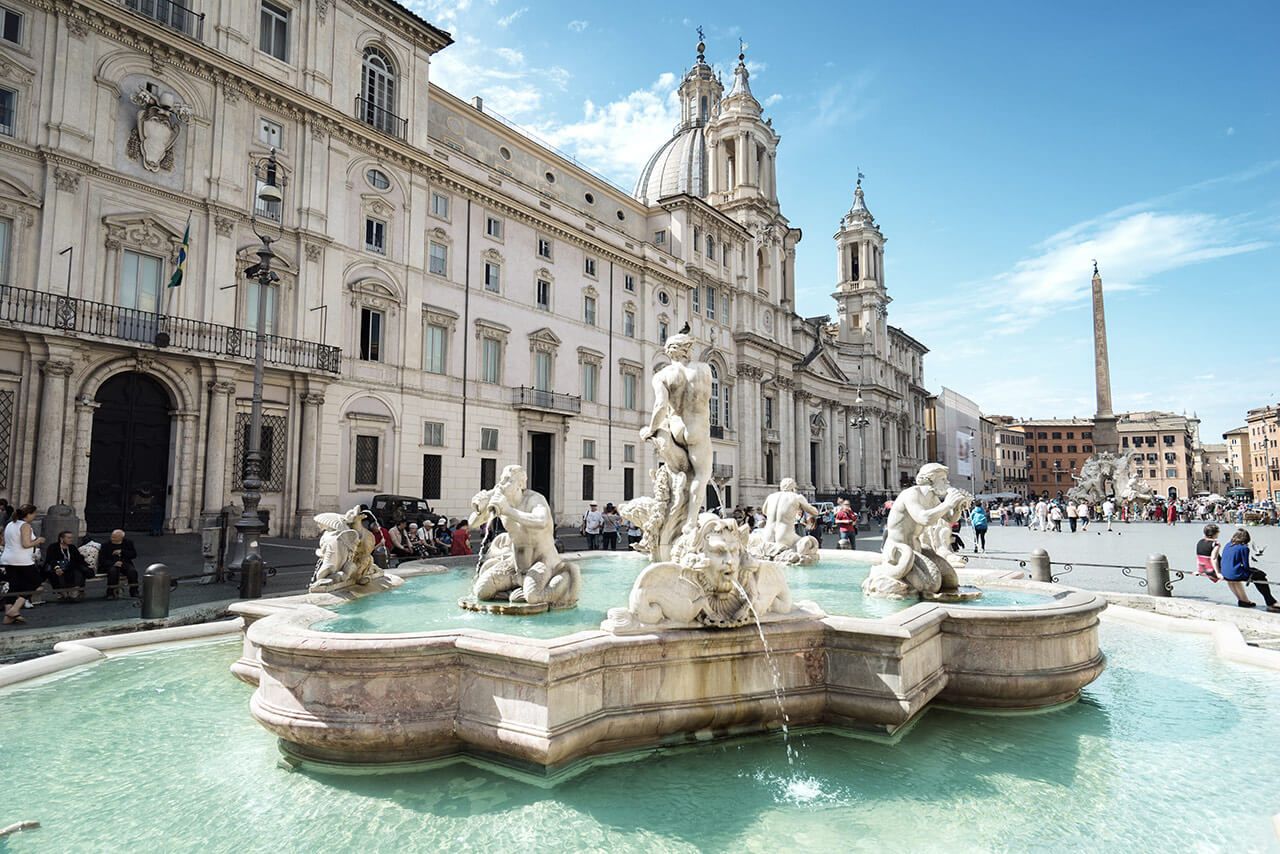
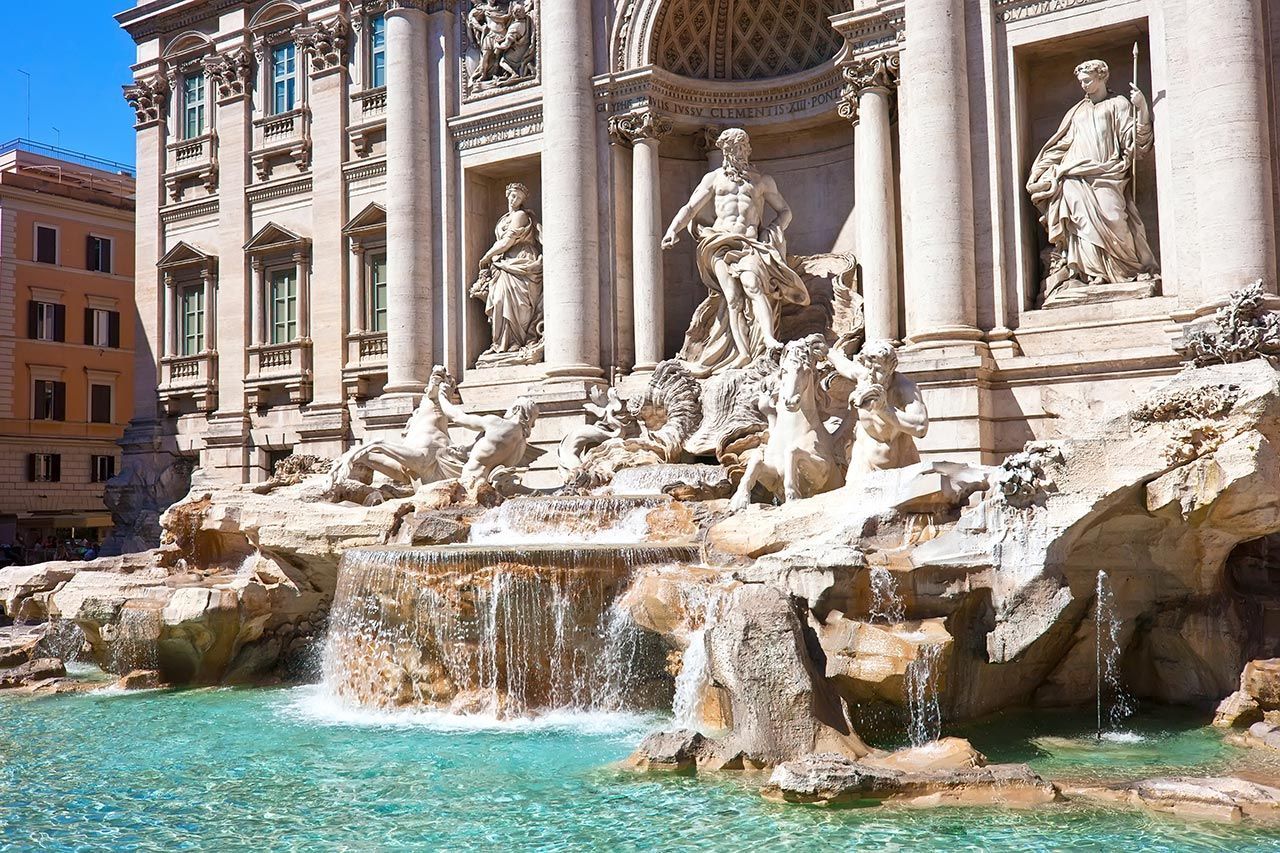
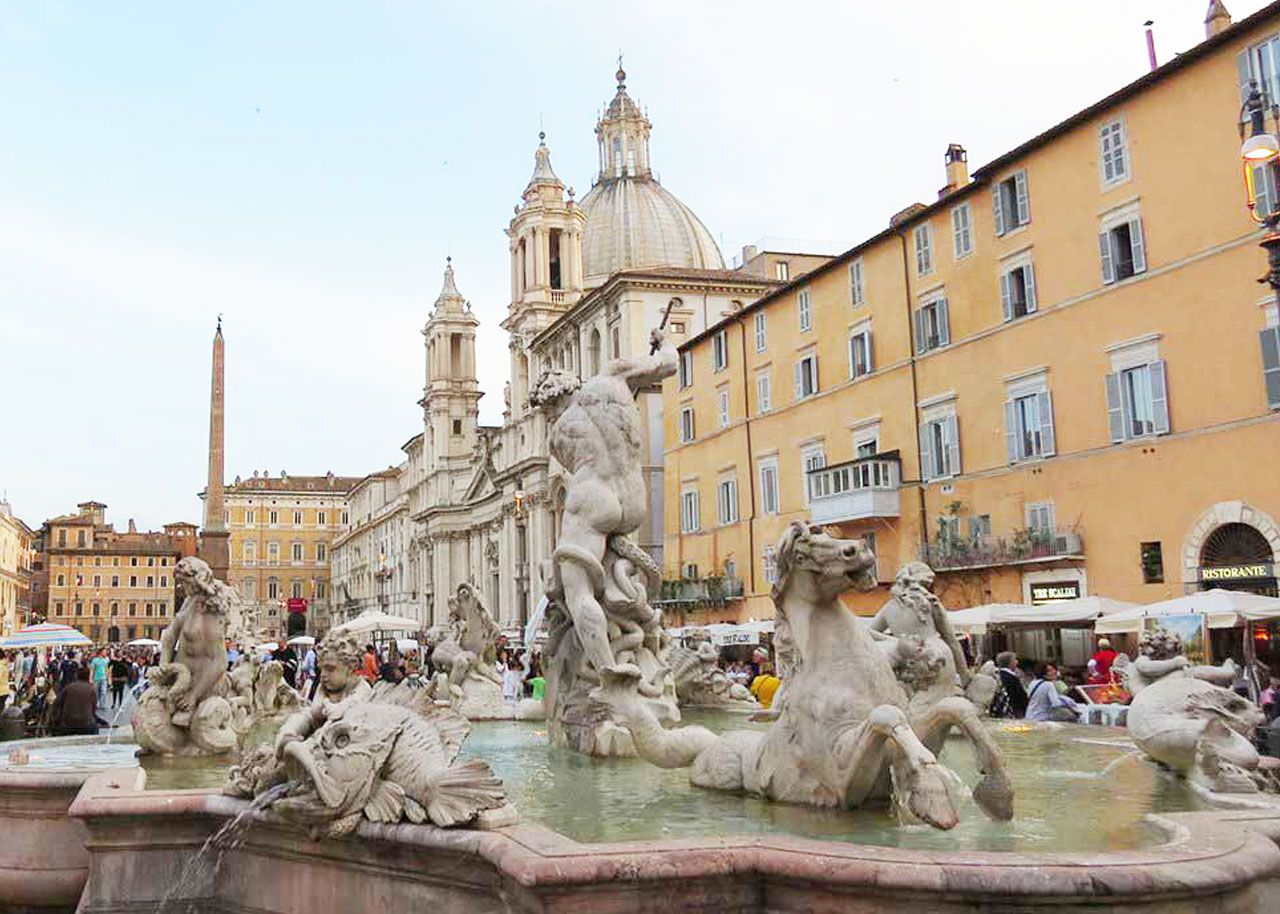
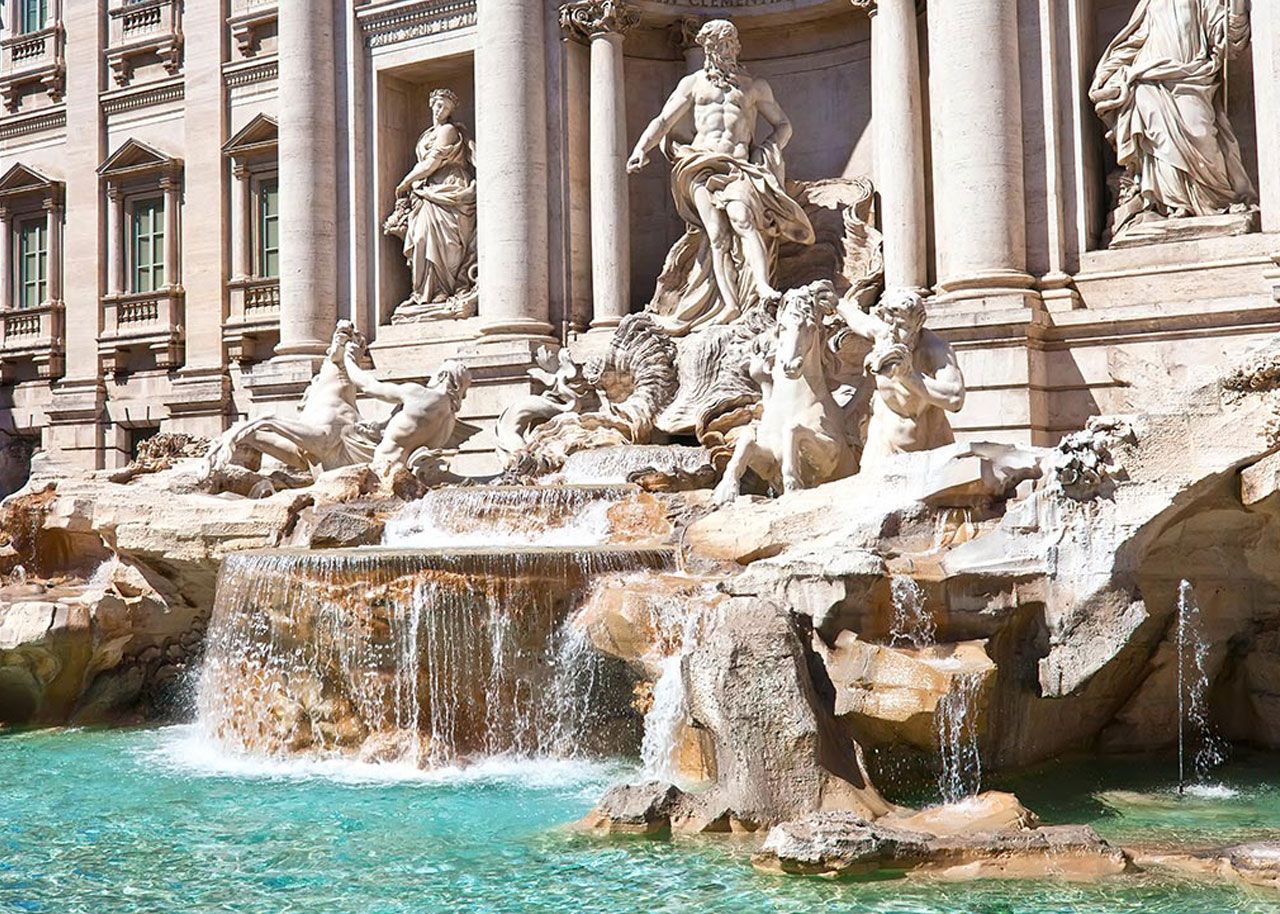
The tour begins near Piazza della Repubblica and includes ten monumental fountains, alongside Rome’s most celebrated landmarks: the Spanish Steps, the Trevi Fountain, the Pantheon, and Piazza Navona.
The experience concludes with a refined Roman ritual: a handcrafted artisanal gelato, enjoyed in one of the city’s most charming settings. An elegant journey through timeless beauty, designed for those who seek depth, culture, and exclusivity.
Rome in Flow Tour of Fountains & Baroque Squares :
One of the most distinctive features of Rome is its many fountains. Although one might expect so Mediterranean a city to be parched, Rome is served by an abundant and pure freshwater supply. The ancient Romans capitalized on this happy fact by building enormous aqueducts, in themselves considerable feats of engineering and organization, that brought water to the heart of the city.
From the Renaissance onward, it was these same aqueducts, rebuilt and restored, that provided the city's water and fueled its fountains. There are no ancient-Roman fountains left, but there are large numbers of Renaissance and Baroque fountains. Those built toward the beginning of the 16th century are restrained. The most celebrated designer of the late Renaissance was Giacomo della Porta, whose architectural fountains were based on elegant contrasts of geometric forms. Water trickles rather than gushes from them.
In the Baroque era, fountains became grander, more freely composed and more natural. Bernini delighted in the Baroque fusion of sculpture, architecture and nature, and created ever more spectacular ways of uniting mythological and allegorical figures - river gods, tritons and dolphins - with rushing water. As the Baroque period unfolded, so the city's fountains became ever more lavish, spectacular, and theatrical, culminating in the most dramatic of them all: the Trevi Fountain 1762 A.D.
Many were commissioned by the popes of the late 16th C and early 17thC, who were concerned to bring water to those areas of the city where it was badly needed.
During our 3h walking tour you will completely acknowledge how Rome became soo rich in splendid fountains.. Our tour winds through the center of medieval and Renaissance Rome, taking in most of the city's best-known fountains and culminating in the most beautiful of all Baroque squares, Piazza Navona where all your senses will be pleased. At the end of the tour our guide will invite you for a Gelati in one of the best and most coisy Gelati place in Rome.